Start with the footprint, then check the inside
A standard 20ft container has nominal external dimensions of 20 feet long, 8 feet wide and 8 feet 6 inches high. A standard 40ft container keeps the same width and height while doubling the length. That means nominal external footprints of 160 and 320 square feet. These figures are useful for a first site sketch; they are not finished interior floor areas.
Interior dimensions and door openings are smaller. Hapag-Lloyd publishes representative dimensions for its fleet and specifically notes that containers vary by manufacturer. If a machine, shelving unit or pallet must fit, use the measurements of the proposed container, including its narrowest doorway. Insulation, wall linings and interior partitions reduce usable space further.
Choose around your storage routine
A 20ft unit can be a practical starting point for household overflow, a small business inventory area or tools that need to stay close to a work zone. A 40ft unit can suit longer materials, larger inventories or plans that need separate work and storage areas. The useful question is how you will reach the contents after the container is full.
Sketch the largest items first. Add shelves, a clear route to the back and enough working room to move goods safely. Frequently used equipment should not require unloading half the container. If you expect several people to work inside, discuss an occupied-space layout instead of treating the project as storage alone.
Door choice can matter as much as length
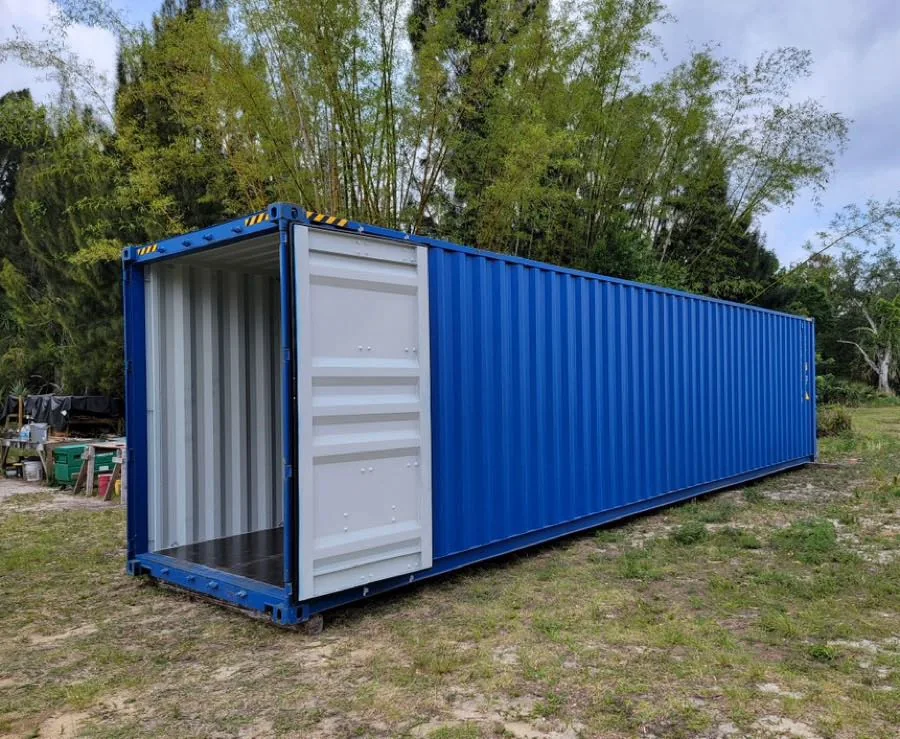
Standard end doors suit many storage arrangements. Double-door containers provide an opening at both ends, while side-door models offer access along a side. A custom roll-up opening may support a particular loading or workshop layout. These options solve different access problems; compare them against the objects you move and the position available on your property.
Plan the direction each door will face before delivery. Include its opening area, the approach for carts or equipment and the room people need outside. A container placed tightly against a fence can lose the practical benefit of an otherwise useful door arrangement.
Separate extra height from extra length
High-cube containers provide additional height, which can help when a conversion needs insulation and a ceiling finish. Confirm the external height, interior clearance and door opening for the actual model being quoted. A taller shell does not make a completed office or home suitable for a site by itself; the finished use still needs its own design review.
Delivery also deserves an early check. The container footprint is only part of the required space. A truck needs a workable approach, unloading position and exit. Send photographs of gates, turns and the placement area so the delivery method can be reviewed before you settle on a size.
Request two comparable quotes
If both sizes might work, request quotes against the same delivery ZIP code and scope. Compare container condition, door type, modifications, delivery and any separately priced site work. A lower container price can be less useful if the layout creates repeated handling or the site requires a different delivery arrangement.
- List the largest items and how often you need access to them.
- Measure gates and photograph the route from the public road to the placement area.
- Ask for the exact unit dimensions and door configuration.
- Confirm the delivered scope and exclusions in writing.
A few things worth knowing
Does a 40ft container provide twice the usable floor space?
Its nominal external footprint is twice that of a 20ft unit. Usable interior space depends on wall construction, finishes, storage layout and the access you need to preserve.
Should I buy a high-cube container for a conversion?
It is an option worth comparing when ceiling clearance matters. Discuss the finished interior height and the project design before choosing the shell.